Key Card or Physical Key: Two Ways to Mark Arrival
Key card or physical key: compare the small gestures, recognition, and room-entry rituals each creates so you can understand how arrival feels.
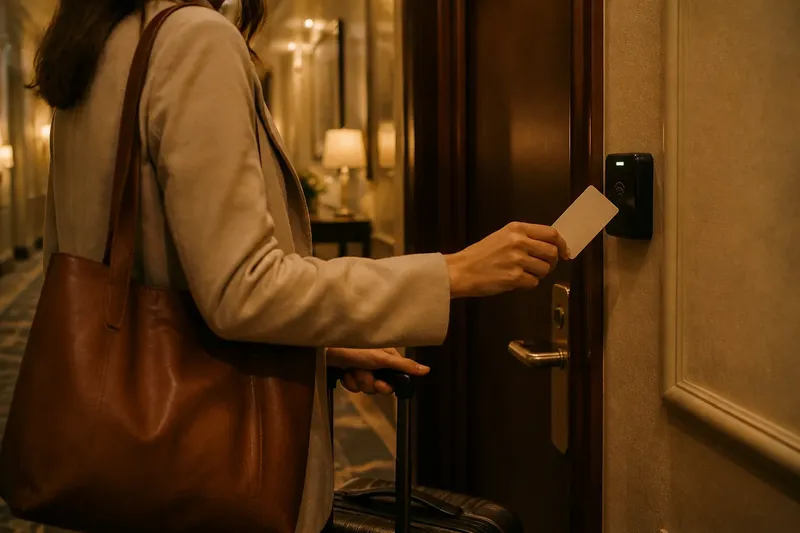
A key card or physical key changes the first few seconds at a hotel room door. A card asks you to present a flat object; a traditional key asks you to carry and turn a distinct piece of metal. Neither is merely a way into the room: each gives arrival a different rhythm, and each shapes what a guest notices at the threshold.
What feels different when you reach the door?
A key card makes entry feel like a brief exchange between hand and reader. You take the card from a wallet, sleeve, or pocket, bring it to the marked spot, and wait for a light or sound before moving on. The gesture is quick, but it depends on noticing where the reader is and presenting the card in a way it can recognize.
A physical key makes the door itself more prominent. The guest finds the lock, fits the key, turns it, and feels the mechanism respond. There is a short, tactile sequence before the door opens, so entering can feel deliberate rather than automatic.
These are differences in sensation, not claims about the quality or security of either format. A hotel can make a card interaction feel welcoming with a clearly visible reader and an easy-to-reach door handle. A traditional lock can feel awkward if the keyhole is hard to see or the key needs an unfamiliar turn.
Which format is easier to handle with luggage?
A key card is usually easier to manage while carrying a suitcase because it is flat and can slip into a wallet or a designated card sleeve. It does not swing from a ring or take up much space in a hand. Still, guests may have to set a bag down to find it, especially if it is buried among room receipts, transit cards, or other small items.
A physical key is easier to locate when it has a substantial handle or a clearly distinct fob. It can be picked out by touch, but it may catch on a bag strap or feel cumbersome when the guest is already holding luggage. A key attached to a large hotel fob may be convenient to spot on a desk and less convenient to carry during an outing.
For a guest, the practical question is not which object is inherently handier. It is where the hotel expects that object to live between the desk and the room. A card sleeve handed over with the card gives the guest a ready place for it; a key ring with a recognizable shape makes it easier to separate from personal keys.
How does each key shape recognition?
A physical key often carries a visible identity. Its cut, metal weight, or attached tag can make it feel like a particular room’s key rather than a generic object. That distinctness can reinforce the sense that the guest has arrived somewhere specific, though it does not reveal anything about how the lock works.
A key card is more discreet. It may look nearly identical to cards used by other guests, and its room association is not always obvious from the object itself. That can make it feel like part of a hotel’s service system rather than a keepsake or a personal token.
Recognition also happens between people. A staff member can notice a guest handling a large fob, while a card may be tucked away before anyone sees it. These cues are small and should not be treated as proof of a guest’s status, room, or intentions; they simply affect what is visible in a shared corridor.
Does the key change how a guest interacts with staff?
Yes, because the handoff gives staff and guest a different moment to share. A card can be passed with a brief explanation of where to tap, then returned to a wallet. A physical key may call for a clearer verbal identification or a reminder to return it, especially if it has a noticeable fob.
The object also influences what happens after a guest leaves the room. A card can travel unobtrusively in a pocket, while a large key may prompt a guest to pause at the desk or ask whether it should be left behind. That creates an additional point of contact, but it can also interrupt a guest who expects to come and go without checking in.
For hotel staff, the useful distinction is between assistance and ceremony. A short, friendly cue about how to use the key helps a first-time guest. Requiring an unnecessary explanation or return ritual can make a simple departure feel like an errand.
What should a hotel consider when choosing a key format?
A hotel should consider the experience it wants at the threshold, not just the object it issues. A card suits an arrival that values a compact handoff and a familiar, low-profile item. A physical key can suit a property that wants the lock and the act of turning it to remain part of the room’s character.
- Visibility: Can a tired guest find the reader or keyhole without searching?
- Grip: Can the guest hold the key while managing a bag, coat, or phone?
- Distinctness: Is the card sleeve or key fob easy to recognize among personal belongings?
- Instructions: Does the handoff explain the one unfamiliar action in plain language?
- Return expectations: Does the guest know whether to keep the item, leave it in the room, or bring it to the desk?
- Shared spaces: Does carrying the object create a useful greeting or an awkward demand for attention?
These checks help a property choose and present its format as one coherent arrival ritual. The object cannot make an unclear doorway intuitive by itself. Clear placement, a considerate handoff, and an understandable return custom matter more than decorative flourishes on the card or fob.
How can a guest make either format feel less fussy?
Give the key one consistent home. Keep a card in the same wallet pocket or sleeve each time, and put a physical key on a separate ring or in a secure pocket that is easy to reach. This small habit reduces searching at the door without turning room entry into a chore.
Say you arrive with a rolling suitcase, a tote, and a card sleeve from the front desk. You place the sleeve in the same outer pocket of the tote before leaving the elevator; at the room, you can reach for it without opening the suitcase or balancing loose items. The expected result is a calmer pause at the door, not a faster or more secure entry.
It is not worth memorizing every possible reader location or carrying extra accessories just to make the ritual feel polished. If the instruction is unclear, ask the desk once and then use the simplest storage habit that suits the object you received.
Which key-card or physical-key questions come up most often?
Should I keep the card in my wallet?
Yes, if it fits without bending and you can find it readily. A sleeve or a dedicated pocket can keep it separate from cards you use frequently, so you do not have to sort through your wallet at the door.
Why does a physical key often have a large fob?
A fob makes the key easier to hold and distinguish from small personal keys. It may also make the object more noticeable, so guests should follow the hotel’s directions about carrying or returning it.
What should I do if I cannot tell how to use the key?
Look for a visible reader or lock and try not to force anything. If the intended action is not clear, contact the front desk for a brief explanation rather than guessing at the mechanism.
Does one format make arrival feel more personal?
That depends on the surrounding service. A staff member who explains a card with warmth can make a compact handoff feel personal, while a physical key can feel meaningful when its use is simple and the guest is not burdened with extra rules.
What should the arrival ritual leave with the guest?
The best key format is the one that lets the guest understand the next action and settle into the room without unnecessary friction. A card can keep the gesture discreet; a physical key can make the act of entry more tangible. Either can feel considered when the object is easy to identify, the instructions are brief, and the return custom is clear.
For anyone comparing a key card or physical key, notice the moment after the door opens: where the key goes, whether it is easy to retrieve later, and whether the hotel has made its expectations clear. That small decision carries the arrival ritual into the rest of the stay.